Additional information
| Weight | 32.70 g |
|---|---|
| Dimensions | 11.5 x 9.5 cm |
| Reference | C.f. Rijksmuseum BK-1958-28, BK-KOG-30 voor gelijke decoratie, BK-1966-82, BK-NM-11092 voor het model |
€750.00
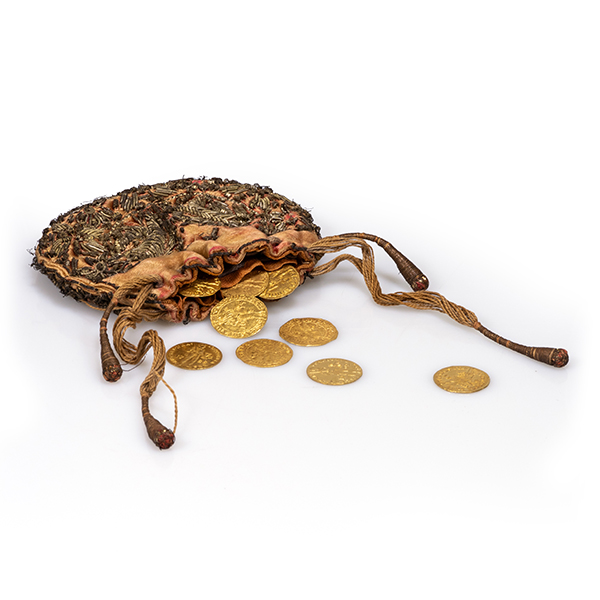
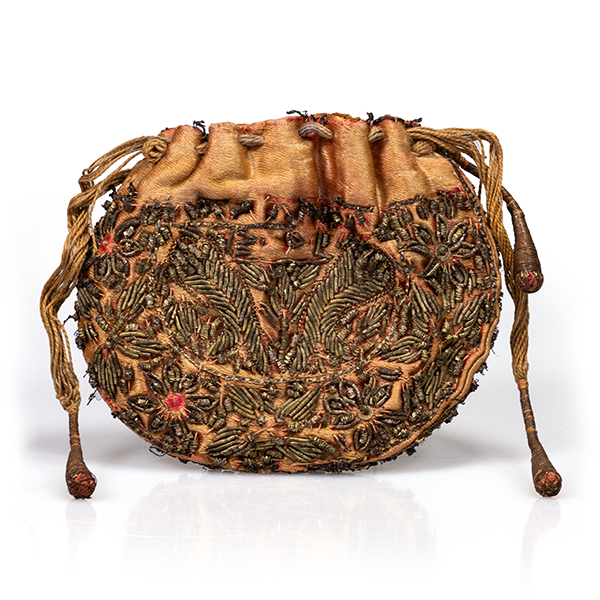
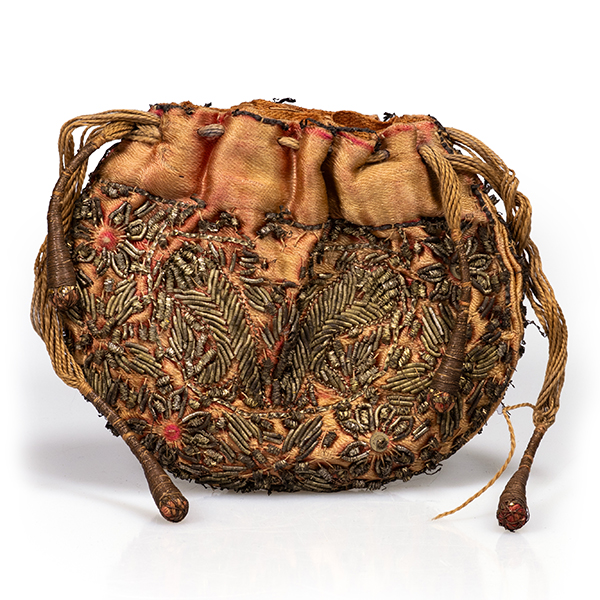
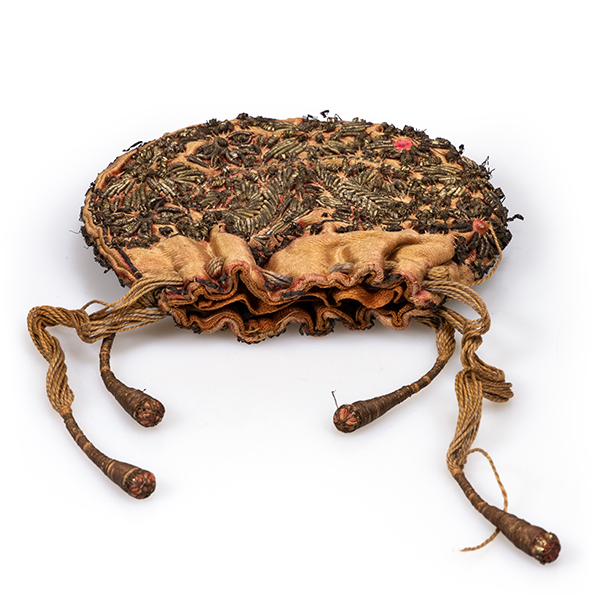
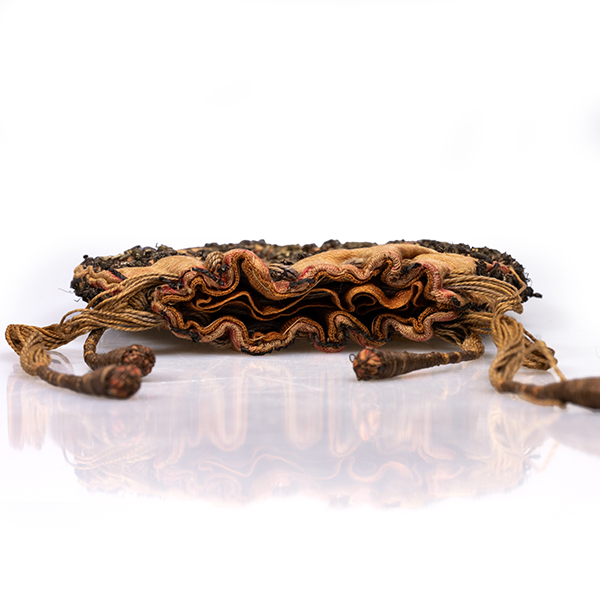
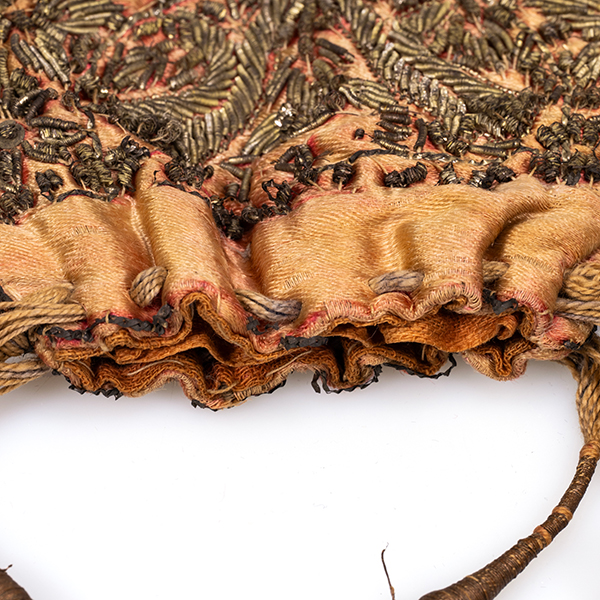
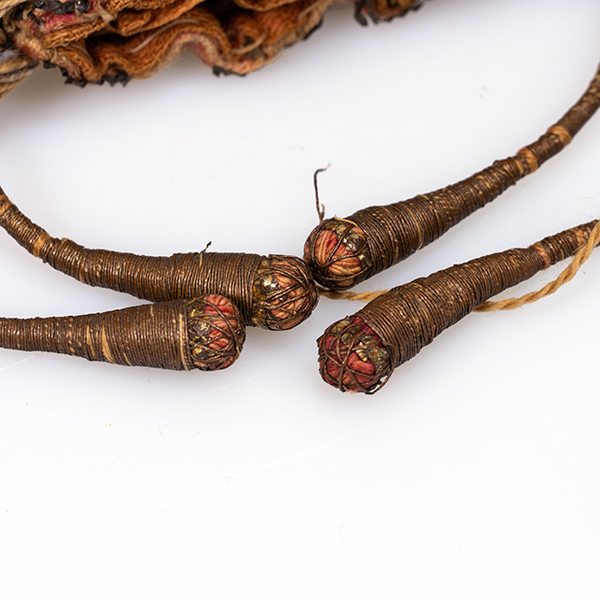
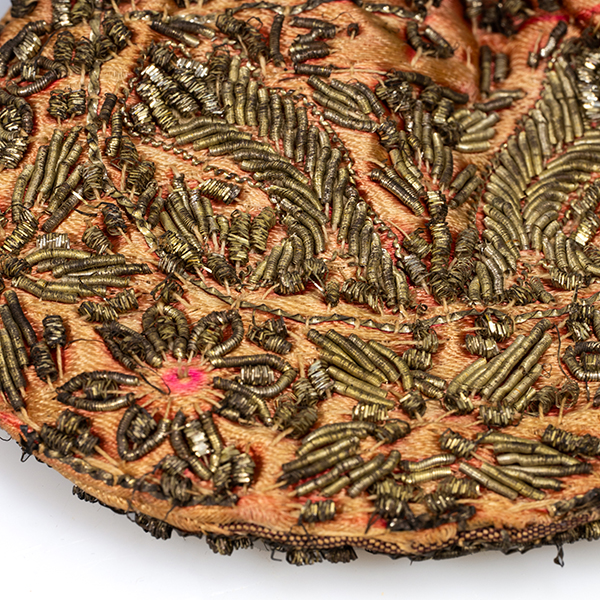
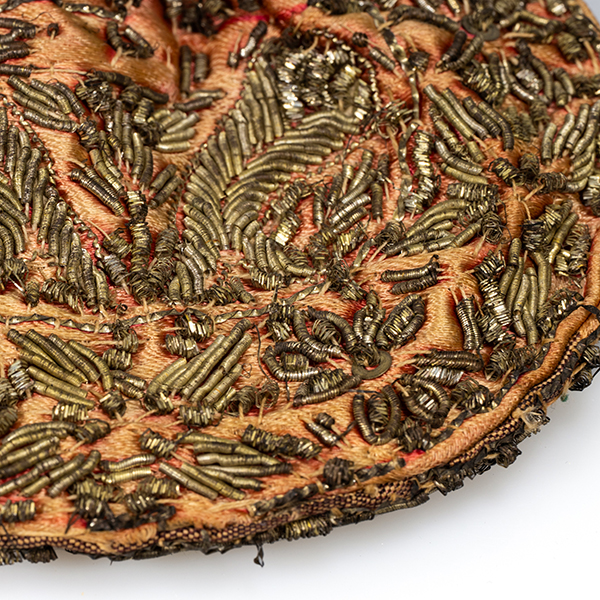
Coin purse from the Low Countries, ca. 17th/early 18th century. Coral-red velvet with embroidery in gold thread, sequins, and gold ‘cannetille’ (coiled wire) decorations. Drawstring purse with two cords, each ending in a gold-thread-wrapped ‘acorn’.
Extremely rare, with virtually all the intricate gold cannetille decorations in good condition.
While the coin purse (derived from the French ‘bourse’) was relatively simple in the Middle Ages, often made of leather and tied to a belt, this began to change gradually in the 16th century. First, the characteristic ‘phallus purse’ appeared, and over the course of the 17th century, various types of purses emerged to serve different functions. For the wealthy burghers of the Republic, the purse became a true status symbol; increasingly lavish silk and velvet purses appeared, adorned with ever-more luxurious decorations featuring gold and silver thread, brocade, and a variety of goldsmithing techniques. Gold ‘cannetille’ (tiny spirals of fine gold wire) particularly enhanced the appearance of the most luxurious purses. Floral motifs were popular, as were coats of arms or the owners’ initials, ensuring that when these dignitaries strolled through the market, there was no doubt as to whose belt the purse was hanging from. Internal compartments were also introduced, allowing for the carrying of other objects alongside coins. The earliest purses with internal metal frames appeared as early as the late 17th century and would gradually evolve into the familiar metal-mesh chainmail purses of the 19th century.
In stock
| Weight | 32.70 g |
|---|---|
| Dimensions | 11.5 x 9.5 cm |
| Reference | C.f. Rijksmuseum BK-1958-28, BK-KOG-30 voor gelijke decoratie, BK-1966-82, BK-NM-11092 voor het model |